

Biomass Pellet Production Line
Types of Biomass Pellet Production Lines
Biomass raw materials come in many types. Their moisture, particle size and other properties vary a lot. RICHI biomass pellet lines use PLC closed-loop control and modular roller design. This allows stable pelletizing of various forestry and agricultural residues. It meets production needs of different scales and uses.
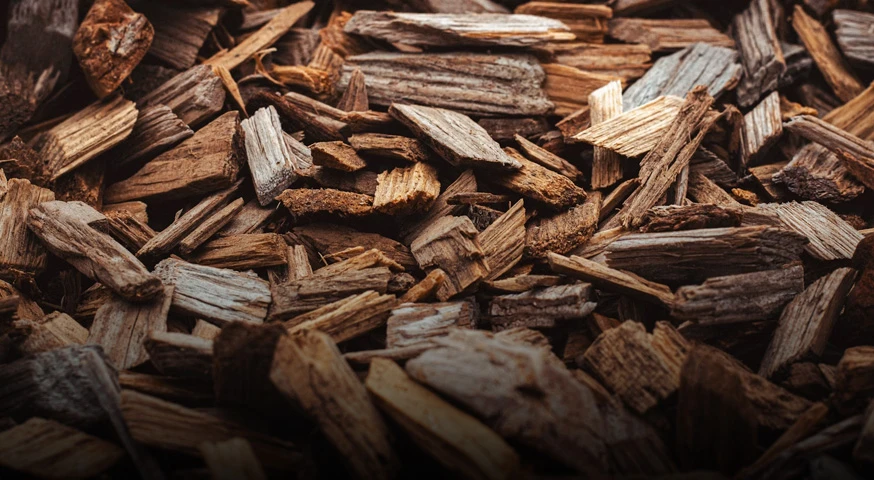

Wood Processing Line
You can process logs, branches, sawdust, shavings, wood offcuts. The line uses a heavy-duty chipper and a high-power grinding mill. Whether the raw material is hardwood or logs, it grinds evenly.

Grass Processing Line
Raw materials are mainly alfalfa, forage grass and other grass plants. The line includes a rubbing machine and a forced feeding system. This prevents material bridging and blockages.
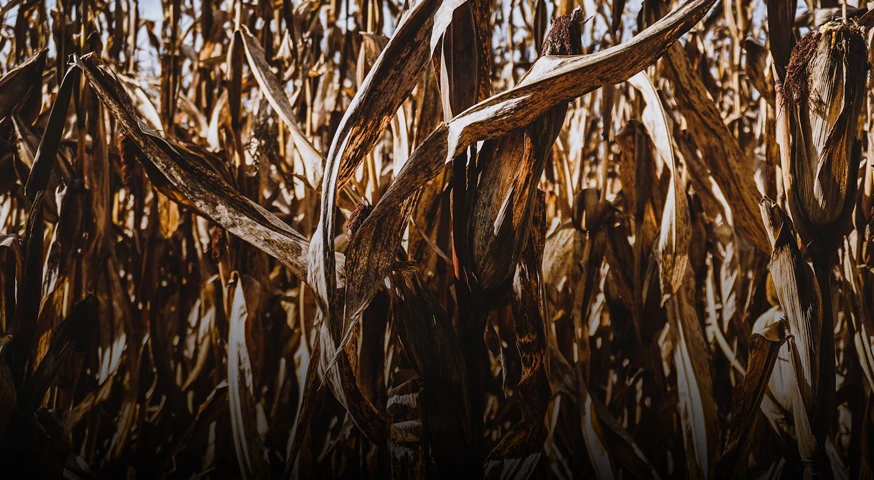
Straw Processing Line
Raw materials are corn straw, wheat straw, rice straw, etc. The line includes a chopper and a bale breaker to easily cut the straw. A drum dryer controls moisture to around 15% for better pelletizing.

Husk Processing Line
Main raw materials are palm husk, rice husk, peanut shell, etc. Husk materials have high hardness and strong abrasiveness. The ring die uses wear-resistant alloy steel with deep carburizing and quenching. This increases wear life by 3–5 times.
How a Complete Biomass Pellet Production Line Works
Raw Material Pretreatment
First, remove stones, metals, ropes and other hard impurities. Long materials like branches and straw go through a chipper or chopper. They are cut into 3–5 cm sections.
Grinding
Then the pretreated material is ground into uniform fine particles of 3–5 mm. Fineness directly affects pelletizing efficiency and die life. For different raw materials, we match suitable grinders-hammer mill, forage specific grinder, air-swept grinder, etc.
Drying
Controlling moisture content between 13%–18% is key for pelletizing. Drum dryers are most common because they handle large volumes. For light materials, you can choose airflow dryers. They are faster but use more energy.
Pelletizing
The dried fine material enters the ring die pellet mill. Under high pressure, the lignin softens and becomes a natural binder. The material is pressed into cylindrical pellets. Ring die hole size can be 6–12 mm as needed. Compression ratio is adjusted based on raw material characteristics: hard wood needs a lower ratio, straw needs a higher ratio to increase forming force.
Cooling
Fresh pellets come out at around 80°C. They are soft and easy to break. They pass through a counterflow cooler and cool quickly to near room temperature. Excess moisture is also removed.
Sieving
Pellets go through a vibrating screener. It separates good pellets, fine powder and oversized pellets. Good pellets go to the packing step. The fine powder goes back to the pelletizing step for reprocessing. Overall material utilization exceeds 95%.
Packing
Good pellets enter a finished product silo. They are automatically weighed and bagged per customer needs. Common bags are 25 kg or 50 kg woven bags. We can also custom big bags or bulk loading solutions.

Global Cases of Biomass Pellet Production Lines
Our biomass pellet lines are running in many regions worldwide. Customers range from wood processing plants to power generation companies. Raw materials range from sawdust to palm husk. Here are some representative projects.
●Germany
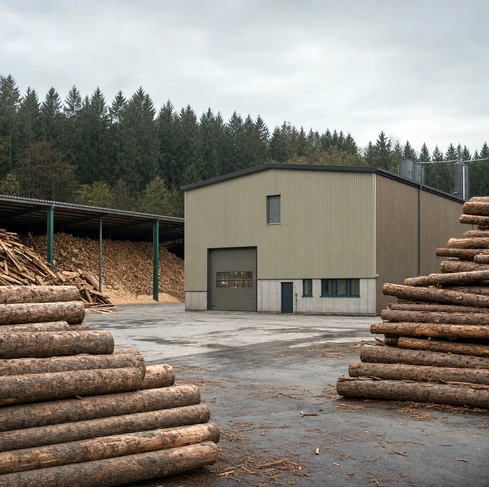
Log Waste Pellet Line Project
The main challenge was the high hardness and long fibers of the raw material. We supplied a heavy-duty chipper and a high-wear ring die. This ensured stable pellet quality and long die life.
- Customer output : 2t/h
- Raw materials : log waste, branches, wood chips
●South Africa
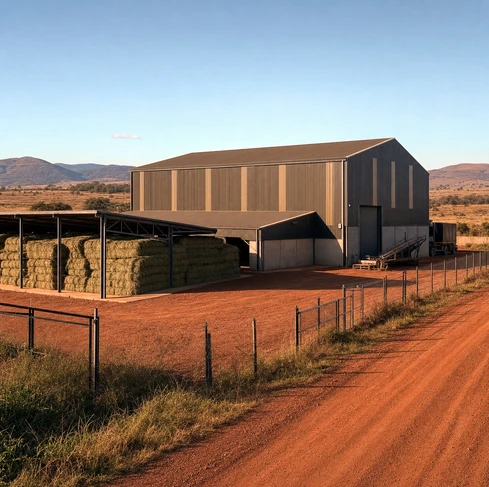
Peanut Shell & Corn Cob Pellet Line Project
We designed a 12 t/h line based on customer needs. Peanut shells and corn cobs had a moisture content of only 17%–23%. No drying equipment was needed. This greatly reduced equipment investment and operating costs.
- Customer output : 12t/h
- Raw materials : peanut shells, corn cobs, agricultural residues
●USA
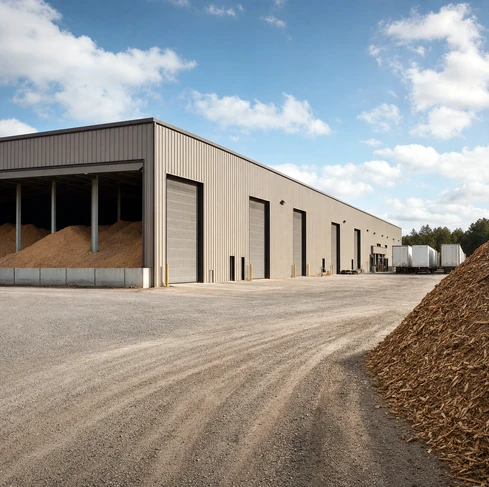
Forestry Waste Pellet Line Project
We supplied a dual-channel drying system and an automatic packing line. The whole line was highly automated. Only 6–7 operators were needed to run the entire process.
- Customer output : 5-6t/h
- Raw materials : sawdust, bark, forestry waste
●Vietnam
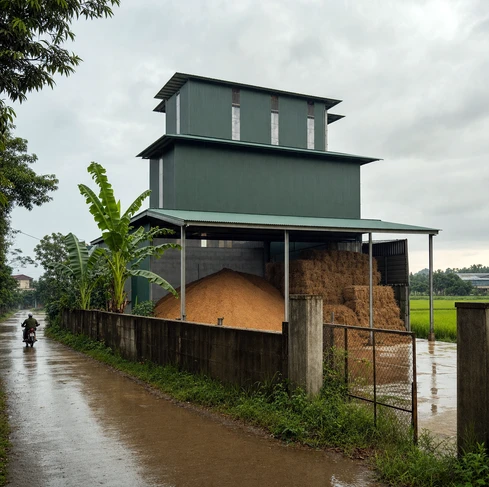
Rice Husk & Straw Pellet Line Project
Rice husk is fluffy and easily causes blockages. We installed a forced feeding system and a cyclone dust collector. This significantly improved production efficiency.
- Customer output : 1.5–2t/h
- Raw materials : rice husk, rice straw, paddy husk

About RICHI Machinery
Based in China and serving global markets, RICHI Machinery is a global manufacturer and engineering service provider specializing in pellet production equipment and complete processing systems. From feed, biomass, and organic fertilizer to cat litter and agricultural waste recycling, we help customers build efficient, reliable, and scalable production solutions tailored to their raw materials, capacity requirements, and market goals. With projects delivered across multiple industries and countries, our focus is always on practical performance, long-term operation, and customer success.
Advanced Engineering & Intelligent Manufacturing
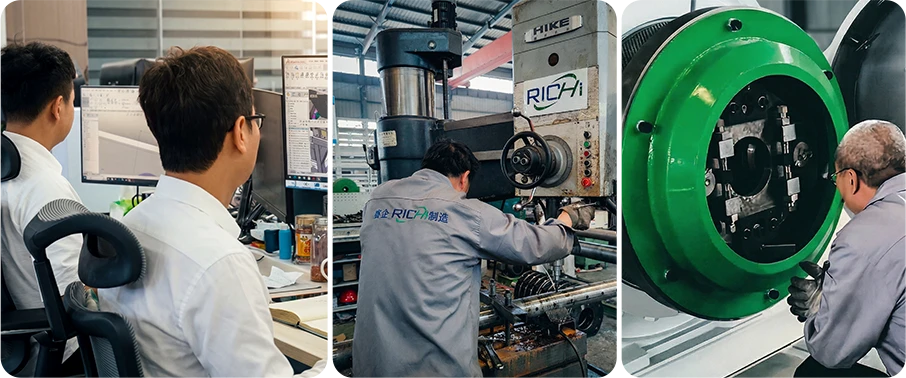
Driven by technology and manufacturing expertise, RICHI integrates process engineering, equipment R&D, intelligent manufacturing, and project delivery into one complete service system. Our modern production facilities, precision machining capabilities, and experienced technical team allow us to provide customized equipment, complete plant design, automation integration, installation guidance, and ongoing technical support. From single machines to fully integrated production lines, we deliver solutions designed for stability, efficiency, and sustainable production growth.
Frequently Asked Questions
The following summary hopes to provide practical help for you to start your own biomass pellet production line.
My raw materials vary–both wood and straw. Can I use the same equipment?
Yes. Our line design considers multi-material compatibility. By changing screen mesh sizes, adjusting grinder blades and the ring die compression ratio, you can process wood, straw, rice husk and more. But keep in mind: frequent material switching affects production efficiency. If you plan to process several materials long-term, talk to our engineers. We will give you the best configuration advice based on your material mix and expected output.
Is palm husk difficult to pellet? Do you have any special treatment?
Yes, palm husk is tougher on equipment. It has high hardness and strong abrasion. Ordinary ring dies may fail after only a few hundred hours. For palm husk we supply ultra-wear-resistant ring dies (deep carburizing and quenching), SKF bearings and a specific compression ratio. This extends service life. If you plan to process palm husk, tell us in advance. We will consider this at the design stage.
My workshop space is limited. Can your equipment fit?
Usually yes. We have many cases where space was tight – for example, a customer in Uzbekistan had a railway track crossing their workshop. We solved it with modular layout and lightweight design. If you send us your workshop details, we can help design a layout that ensures smooth installation.
How long does installation and commissioning take? Will you send people to my site?
A small to medium line usually takes 15–30 days for installation and commissioning. We will send 1–2 engineers to your site. They will guide installation, do commissioning and train your operators. You need to prepare local workers to help with installation. Also make sure water, electricity, steam and other utilities are ready. Training usually takes 2–3 days, until your people can run the line independently.
How much does drying affect final pellet quality? When do I need to add drying equipment?
It matters a lot. If moisture is too high, pellets won’t form. If too low, pellets are loose and break easily. Generally, if raw material moisture exceeds 20%, you must add drying equipment. If you use fresh wood or wet straw (often 30%–60% moisture), a drum dryer is required. If your raw material is already dry – for example, dry sawdust from a furniture factory – you can go straight to pelletizing and skip drying. We will check your raw material for you before you order.
How long do the ring die and roller last? Are they expensive to replace?
Service life depends on what material you process and how well you maintain the equipment. For wood, straw and common materials, ring die life is about 800–1,200 hours. For high-wear materials like palm husk, the die wears faster. Our ring dies use high-wear alloy material, so they last longer than ordinary steel. For specific prices, please ask our sales team. They will quote based on your machine model.


