
Sheep Feed Pellet Mill
If you are still struggling with the growth and development of lambs, meat sheep, and fattening sheep, we invite you to experience Richi’s sheep feed pellet mill. It is designed to precisely meet the dietary requirements of various sheep breeds across different growth stages, helping you resolve these challenges!
Customer output : 1-20t/h
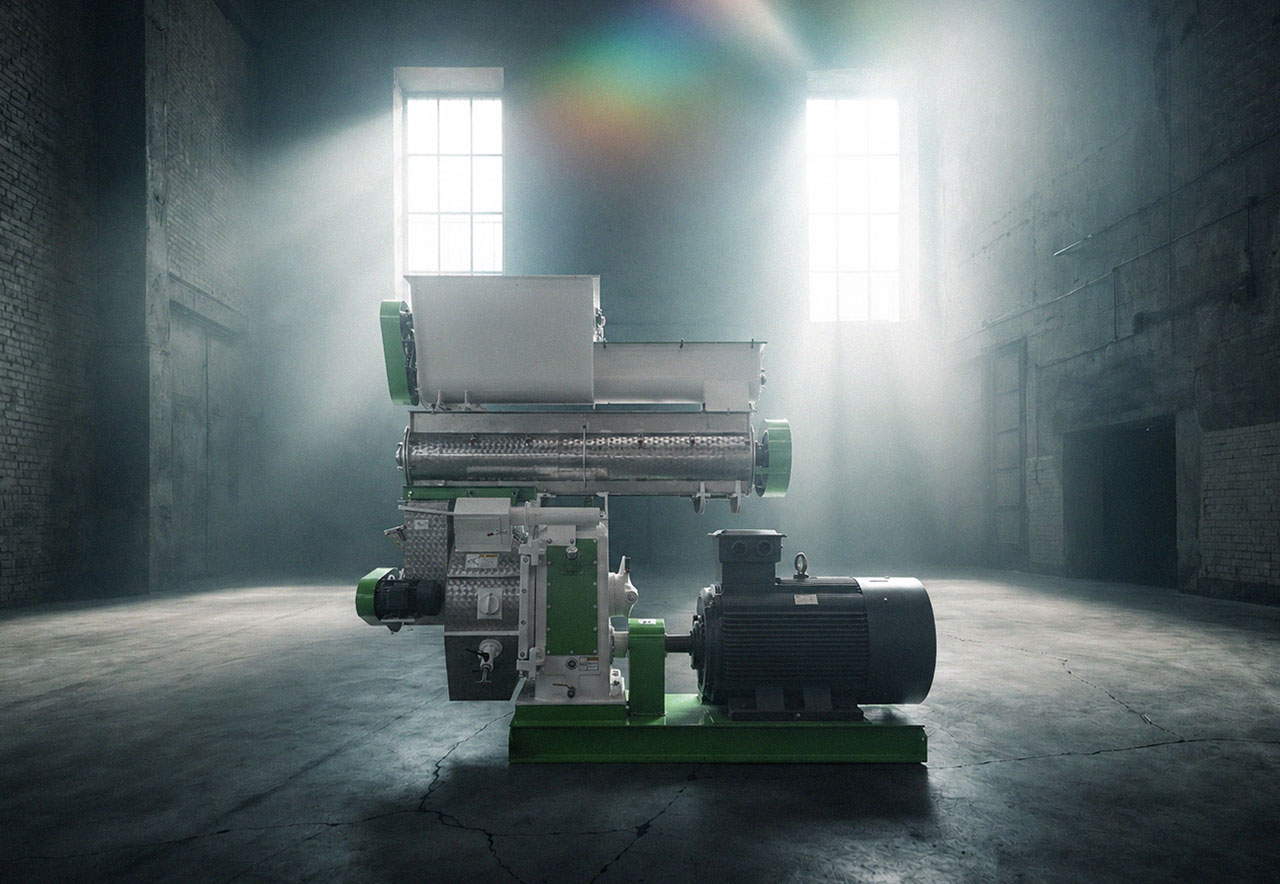
Equipment Introduction
Feed intended for ruminants-typified by sheep-typically requires raw materials with a high crude fiber content. These materials are diverse in nature, commonly including grass meal, crop straw, alfalfa, corn, and soybean meal. To ensure that the finished feed not only aligns with the feeding habits of sheep and other ruminants but also maintains a low rate of crumbling during storage and transport-thereby minimizing feed waste-it is essential that the pellets possess a compact, uniform structure and moderate hardness. Furthermore, given that feed formulations of this type often exhibit poor flow characteristics and present significant challenges during the compression process, the pelletizing equipment itself must meet rigorous performance standards. Specifically, it requires exceptional adaptability to guarantee the smooth formation of raw materials and ensure a stable, consistent output. This particular pelletizer perfectly fulfills all the aforementioned requirements for feed pelletizing; with this single machine at your disposal, pellet production becomes a worry-free endeavor-prioritizing both ease of use and efficiency.
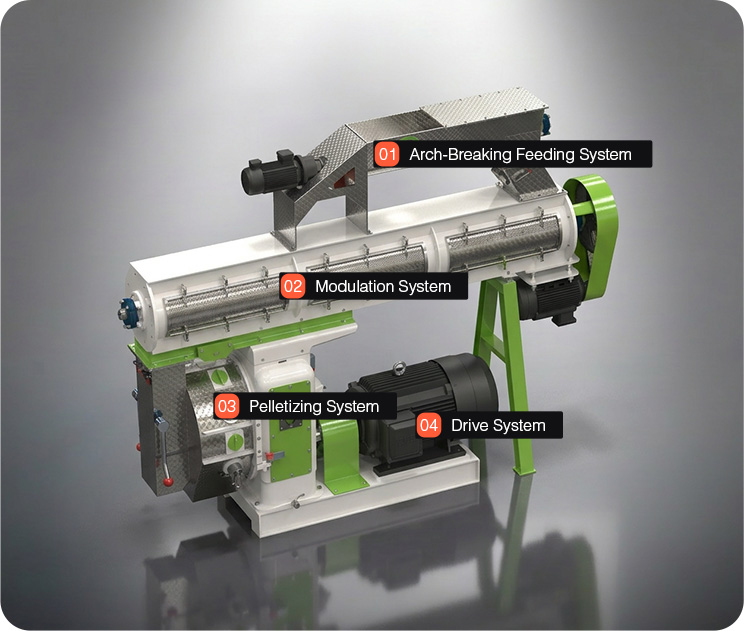
Structure of Sheep Feed Pellet Mill
This specific pellet mill primarily consists of a feeding system, a conditioning system, a pelletizing system, and a transmission system. These systems work in concert and cooperate with one another to facilitate a continuous pelletizing process-ranging from raw material conveyance and softening treatment to high-pressure molding-thereby effectively transforming raw materials into pelleted feed suitable for both consumption and storage.

Feeding System
The feeding system serves as the critical first stage in ensuring the stable operation of the entire machine. It primarily consists of a hopper, an impeller feeder, and a variable-frequency motor. By utilizing variable-frequency control, the system precisely regulates the feeding rate, thereby conveying raw materials-such as grass meal, alfalfa, and crop stalks-uniformly and continuously into the pelletizer. During actual operation, dynamic adjustments must be made based on the specific characteristics of the raw materials (e.g., the proportion of grass content, moisture levels, etc.).
Modulation System
Throughout the entire pelletizing process, the conditioning system serves as a critical pre-treatment stage. By introducing high-temperature steam and thoroughly agitating the materials, it gradually softens high-fiber raw materials-such as forage and crop stalks-and enhances the degree of starch gelatinization, thereby improving the material’s binding properties and plasticity. Furthermore, the conditioning process exerts a certain sterilizing effect, reducing the content of harmful microorganisms in the raw materials and improving the feed’s palatability, making it more readily accepted by sheep during consumption.
Pelletizing System
During the pelletizing process, the die aperture, compression ratio, and the clearance between the press rollers and the ring die are the critical parameters that determine the quality of the resulting pellets. Our pelletizing system features superior compression capabilities and enhanced wear resistance. When processing sheep feed ingredients-which typically contain a high proportion of high-fiber materials such as forage grass and crop stalks-this system not only effectively ensures stable pellet formation and minimizes die clogging, but also improves pellet density and overall pelletizing yield.
Drive System
During actual operation, the stability of the conveying system directly impacts the working status and production efficiency of the pelletizer. To overcome the challenge posed by the high resistance inherent in sheep feed-which often contains a large proportion of high-fiber ingredients-our conveying system features a stable and reliable high-torque transmission structure. This design ensures smooth operation even under heavy-load conditions, effectively preventing issues such as slippage, unexpected shutdowns, or insufficient power.
Parameter Table of Sheep Feed Pellet Mill
Depending on varying production requirements, we primarily offer the following nine models of sheep feed pellet mill. We are confident that you will find a model that meets your satisfaction. Detailed specifications are provided in the table below.
Animal feed production
| Model | SZLH250 | SZLH320 | SZLH350 | SZLH420 | SZLH508 | SZLH558 | SZLH678 | SZLH768 | SZLH858 |
| Output (T/H) | 1-2 | 3-4 | 5-7 | 8-12 | 10-18 | 15-25 | 20-30 | 25-40 | 24-42 |
| Main Motor Power (KW) | 22 | 37 | 55 | 110 | 160 | 180/200 | 220/250 | 250/280 | 315/355 |
| Feeder Motor Power (KW) | 0.75 | 1.5 | 1.5 | 1.5 | 2.2 | 2.2 | 2.2 | 2.2 | 2.2 |
| Conditioner Motor Power (KW) | 1.5 | 2.2 | 3 | 7.5 | 11 | 11 | 11 | 11 | 15 |
| Finished Pellet Diameter (mm) | 2-12 | ||||||||
| Ring Die Diameter (mm) | 250 | 320 | 350 | 420 | 508 | 558 | 678 | 768 | 858 |
Advantages of Sheep Feed Pellet Mill
Our pellet mills offer a range of advantages-including high efficiency and stability, superior pellet quality, a high degree of automation, and full-line integration capabilities-ensuring they consistently meet your diverse requirements.
number one
High Efficiency and Stability
Our equipment boasts robust continuous production capabilities, capable of meeting the demands of prolonged, uninterrupted operation. Even under heavy-load conditions, it maintains stable performance, thereby effectively boosting overall production efficiency. Furthermore, a stable transmission system effectively minimizes mechanical shock and wear during operation, extending the service life of critical components and reducing the frequency of maintenance and downtime. This ensures the entire production line operates with greater efficiency and cost-effectiveness.
number two
Superior Pellet Quality
Through an optimized conditioning system, our machines thoroughly soften and uniformly blend forage, crop stalks, and concentrates prior to pelleting. This enhances the overall plasticity of the raw materials, effectively ensuring that the resulting pellets feature a neat appearance, uniform size, and superior overall quality. Additionally, pellets produced using our equipment exhibit high abrasion resistance; they are less prone to crumbling or pulverizing during transportation, storage, and feeding, thereby effectively minimizing secondary losses and preserving nutritional integrity.
number three
High Degree of Automation
From a holistic perspective, our equipment achieves continuous operation-from feeding to pelleting-significantly reducing the need for manual intervention while enhancing both production efficiency and operational convenience. Moreover, upon request, we can equip the machinery with an intelligent PLC control system capable of real-time monitoring and automatic adjustment of critical parameters, such as conditioning temperature, main unit load, and operational status.
Applications of Sheep Feed Pellet Mill
Whether you operate a dedicated sheep feed mill, a forage processing plant, or a large-scale livestock breeding facility, if you aim to boost production output and ensure your sheep grow vigorously and healthily, choosing our equipment is the right decision.
Sheep Feed Mills
For factories specializing in the production of sheep feed, a piece of equipment that is high-quality, high-yield, and capable of continuous operation is clearly indispensable. Our machinery is constructed using premium materials-such as 304 stainless steel and 42CrMo alloy steel-and boasts a production capacity exceeding 40t/h. The use of highly wear-resistant components effectively guarantees the equipment’s long-term operational stability, helping you achieve a rapid return on your investment.
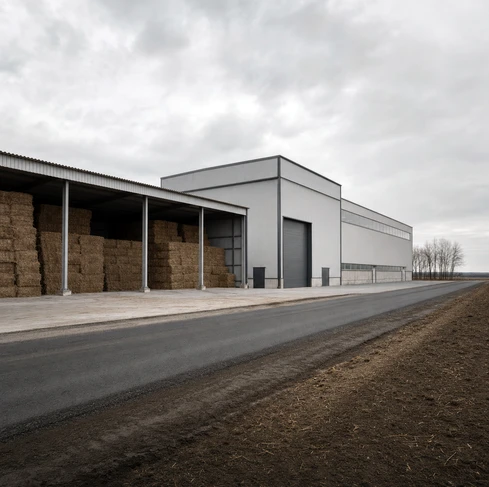
Forage Processing Plants
Utilizing our equipment for granulation not only effectively minimizes raw material loss and waste, but also ensures that the processed forage pellets are clean, hygienic, and highly shelf-stable, while offering enhanced palatability. Whether supplied to livestock farms or distributed in bulk to external buyers, these pellets enjoy greater market popularity-thereby ensuring more stable output and more substantial returns for your business.
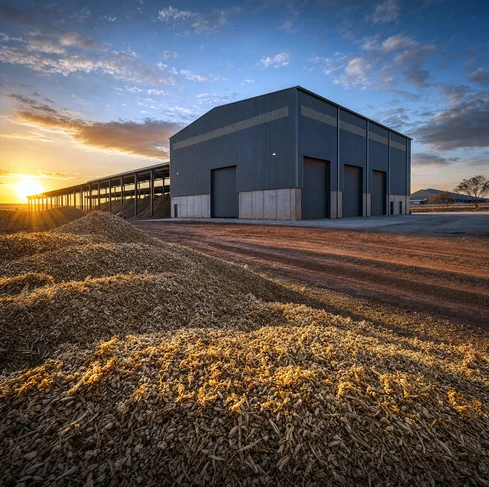
Large-Scale Livestock Breeding Bases
Taking into account the feeding habits and digestive characteristics of sheep, our equipment processes feed into an optimal length of 4-12 mm, ensuring uniform consistency. Furthermore, through high-temperature compression, the coarse fibers within the feed are thoroughly softened and the starch gelatinized-a process that not only preserves nutritional value but also effectively prevents various digestive issues.
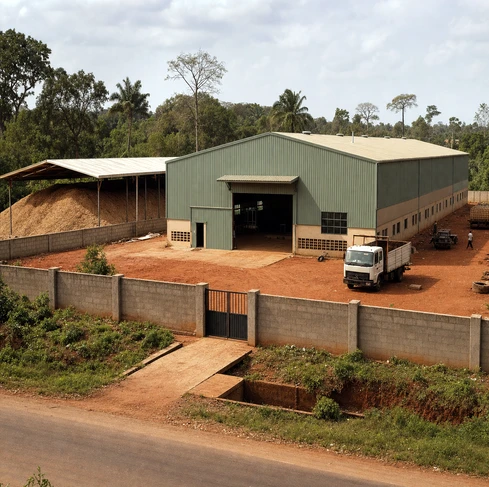
Complete Sheep Feed Production Processing
Our equipment features a fully integrated design that covers every stage of the feed processing cycle. It enables standardized, all-in-one pelletizing, effectively boosting pelletizing efficiency while minimizing raw material loss.
Raw Material Cleaning Section
The primary raw materials for sheep feed-including straw, alfalfa, and corn-inevitably contain impurities such as small stones, sand, and iron scraps. Failure to remove these impurities would not only compromise feed quality but also lead to equipment wear and clogging.
Grinding Section
The cleaned raw materials-such as straw, alfalfa, and corn-undergo a crushing process to achieve the specific particle size required for effective pelletizing. Furthermore, the resulting finer and more uniform particles not only facilitate thorough mixing in the subsequent stage but also enhance the material’s molding rate and the overall quality of the pellets.
Automatic Batching & Mixing Section
Based on the specific nutritional requirements of sheep at various growth stages, an intelligent batching scale precisely weighs the various raw materials according to a predetermined ratio. These materials are then fed into a mixing unit for thorough and uniform blending.
Pelletizing Section
The blended powdery mixture enters the pellet mill, where it is extruded and formed under the high-intensity pressure generated between the ring die and the pressure rollers. Subsequently, a flat cutter precisely slices the extruded material into pellets of the desired length.
Cooling Section
Immediately after pelletizing, the pellets possess high temperatures and moisture levels; they cannot be packaged directly, as this would lead to mold growth or clumping. Therefore, cooling equipment is utilized to rapidly lower the temperature and reduce the moisture content of the pellets, thereby stabilizing their structure and increasing their hardness.
Screening & Packaging Section
Once cooled, the pellets pass through a rotary grading screen to remove any substandard fine powder or broken fragments. This ensures that the finished pellets are uniform in size and possess a neat, consistent appearance.The screened and qualified pellets proceed to the final stage: packaging. Here, an automatic packaging scale weighs the finished product, after which a heat-sealing machine is used to securely seal the bags.
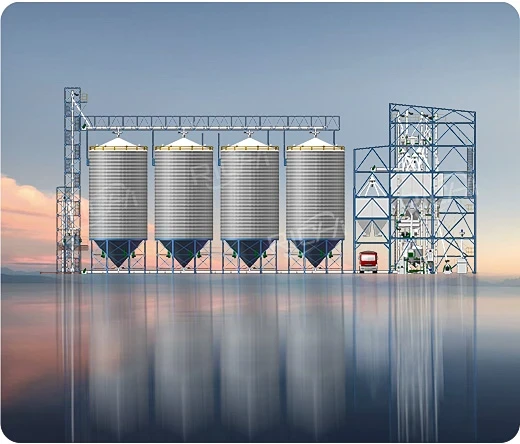
Project Cases
Thanks to its high quality and excellent reputation, Richi’s sheep feed pellet mill has become the preferred choice for numerous customers.
●Kazakhstan
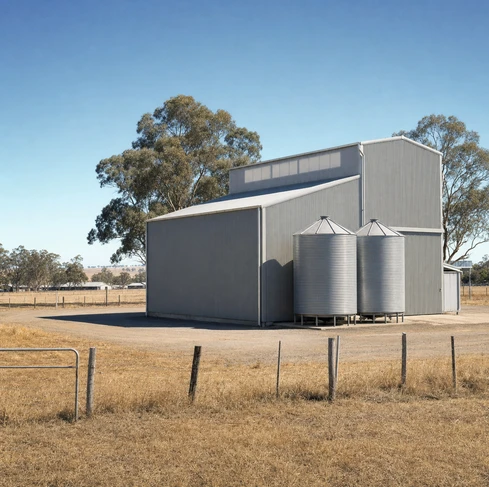
Custom Sheep Feed Pellet Production Line
Background: In March 2025, we delivered a complete sheep feed production line to a livestock farming cooperative in Kazakhstan. The core component of this system is a sheep feed pellet machine with a capacity of 2-3 tons per hour.
- Model: SZLH320
- Capacity: 2-3t/h
- Pellet Diameter: 3mm,4mm(for lambs);6mm,8mm(for fattening sheep&breeding stock)
●Turkey
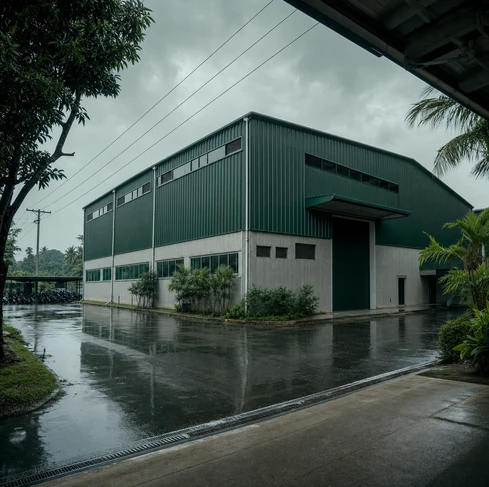
Commercial Sheep Feed Pellet Processing Unit
Background: As a major sheep-rearing nation in the Middle East, Turkey exhibits a robust demand for high-quality pelletized feed. Local ranches have selected our company’s pellet machines to enhance feed utilization efficiency and reduce livestock farming costs.
- Model: SZLH350
- Capacity: 4-5t/h
- Pellet Diameter: 4mm,6mm,8mm (for meat sheep, fattening sheep, &breeding stock)
●Mongolia
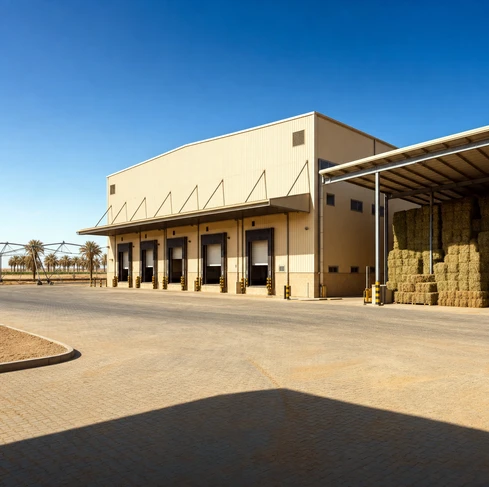
Local Sheep Feed Pellet Making Equipment Project
Background: Mongolia is home to large-scale grassland-based livestock farming operations. A client there constructed a dedicated feed processing plant to transform locally sourced pasture grasses and agricultural by-products into sheep feed pellets that are both easy to store and highly digestible.
- Model: SZLH420
- Capacity: 8t/h
- Pellet Diameter: 4-10mm (Suitable for lambs, fattening sheep, and adult sheep)
●Saudi Arabia
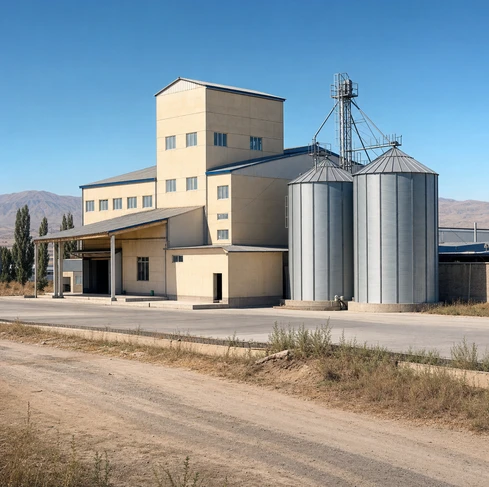
Professional Livestock Feed Pelletizing Solution
Background:To meet the rapidly growing demand for meat sheep farming and festive meat supplies, a major Saudi feed enterprise installed our company’s sheep feed production line to achieve large-scale, standardized feed production.
- Model: SZLH508
- Capacity: 10-12t/h
- Pellet Diameter: 6mm,8mm,10mm (Feed for meat sheep and fattening sheep)
Customized Solutions
If you encounter any issues, please contact us promptly; we will provide you with a customized solution.
Small-Scale Farm Solutions
Specifically designed for small-scale sheep farms and independent livestock breeders, this solution features a simple yet practical configuration that enables independent feed processing. With low investment costs and user-friendly operation, it helps rapidly reduce feed expenses and boost farming profitability.


Medium-Scale Feed Mill Solutions
Tailored for medium-sized feed production facilities, this solution encompasses core processes such as grinding, batching, mixing, pelletizing, and packaging. The production line operates with stability, effectively enhancing feed quality consistency while simultaneously reducing labor requirements.
Large-Scale Production Lines
Aimed at large-scale industrial feed manufacturing plants, this solution employs fully automated production systems and intelligent PLC controls to achieve highly efficient, continuous manufacturing. Standardized production management helps bolster brand competitiveness and large-scale operational capabilities.
Forage Processing Solutions
Designed to meet the processing needs of raw materials such as crop stalks, hay, and high-fiber forage grasses, this solution effectively handles grinding, drying, and pelletizing. It helps reduce transportation and storage costs while simultaneously enhancing the added value and shelf life of the processed forage.

About RICHI Machinery
Based in China and serving global markets, RICHI Machinery is a global manufacturer and engineering service provider specializing in pellet production equipment and complete processing systems. From feed, biomass, and organic fertilizer to cat litter and agricultural waste recycling, we help customers build efficient, reliable, and scalable production solutions tailored to their raw materials, capacity requirements, and market goals. With projects delivered across multiple industries and countries, our focus is always on practical performance, long-term operation, and customer success.
Advanced Engineering & Intelligent Manufacturing
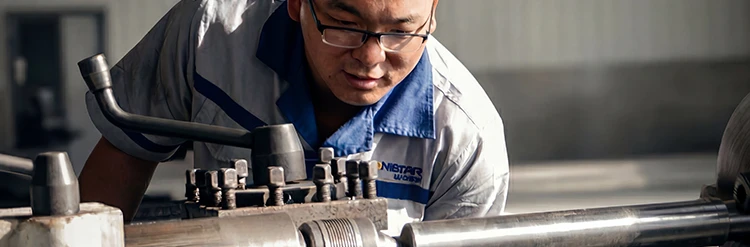
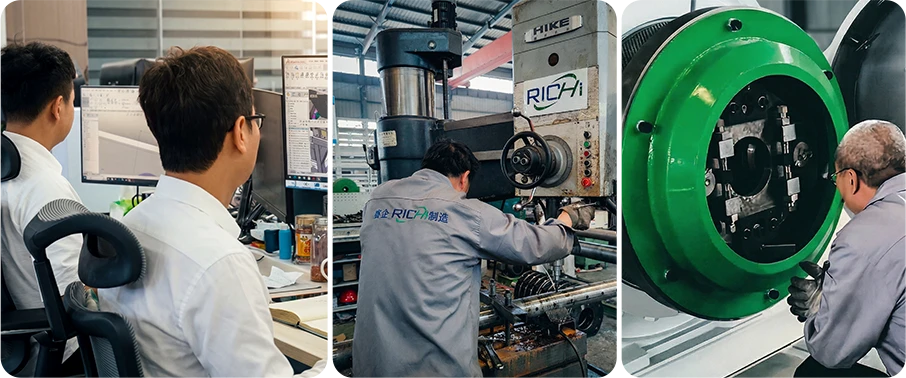
Driven by technology and manufacturing expertise, RICHI integrates process engineering, equipment R&D, intelligent manufacturing, and project delivery into one complete service system. Our modern production facilities, precision machining capabilities, and experienced technical team allow us to provide customized equipment, complete plant design, automation integration, installation guidance, and ongoing technical support. From single machines to fully integrated production lines, we deliver solutions designed for stability, efficiency, and sustainable production growth.
Frequently Asked Questions
What is the generally recommended size for sheep feed pellets?
For lamb feed,3-4mm pellets are typically selected; for fattening sheep and adult sheep,6-8mm pellets are commonly used; and for breeding stock,8-10mm pellets may be chosen depending on feeding habits. Different pellet sizes can be easily switched by simply replacing the equipment’s ring die.
Can straw, grass meal, or peanut vines be added to sheep feed? Is the pelletizing process difficult?
Absolutely. This machine is specifically optimized for processing high-fiber raw materials. When combined with an appropriate conditioning process, it can reliably pelletize corn straw, peanut vines, alfalfa, hay meal, and similar materials. The resulting pellets feature excellent formation and a low pulverization rate, making them highly suitable for commercial meat sheep farming.
How much money can be saved by producing your own sheep feed pellets compared to purchasing finished commercial feed?
If you formulate and pelletize your own feed, you can typically save 200-500 RMB per ton in costs. Furthermore, this approach allows for flexible formula adjustments, improves digestibility and absorption rates, and lowers the feed-to-meat ratio; the larger the scale of your operation, the faster you will recoup your investment.
What equipment is included in a complete sheep feed pelletizing system? Do I need to purchase any additional components separately?
Standard configurations typically include a pulverizer, mixer, pellet mill, cooler, and screener. We offer fully integrated solutions, eliminating the need for you to purchase individual components piecemeal; we provide a one-stop package that allows you to commence production immediately upon installation.
Do the palatability and digestibility of sheep feed improve after pelletizing?
Yes, they improve significantly. Through high-temperature conditioning and extrusion molding, the feed undergoes a higher degree of “cooking” (gelatinization), and its crude fiber is softened. This not only enhances palatability but also eliminates certain harmful bacteria, thereby boosting digestibility and absorption rates while reducing instances of diarrhea and feed wastage.
What is the minimum recommended production capacity for a sheep feed pelletizer?
For individual farmers and small-scale sheep farms, we recommend models with a capacity of 1-2 tons per hour. Cooperatives and medium-sized farms may opt for models ranging from 3 to 6 tons per hour, while large-scale commercial feed mills are advised to install production lines with a capacity of 8 tons per hour or more.
Does the complete equipment system require a large footprint? Are there any specific requirements for the facility?
If an integrated layout is adopted, the structure is compact and requires minimal floor space. Small-scale production lines require only 20-40 square meters of space, while medium-scale lines can be installed and operated within 50-80 square meters; furthermore, the requirements regarding ceiling height and floor load-bearing capacity are relatively low.


