
Dairy Cow Pellet Mill
A good dairy cattle feed pellet machine does more than just pressing materials into pellets. It must run for long hours, keep the fines rate low, and produce uniform pellets that look good.
These factors directly decide whether a feed mill can deliver on time and keep its customers.
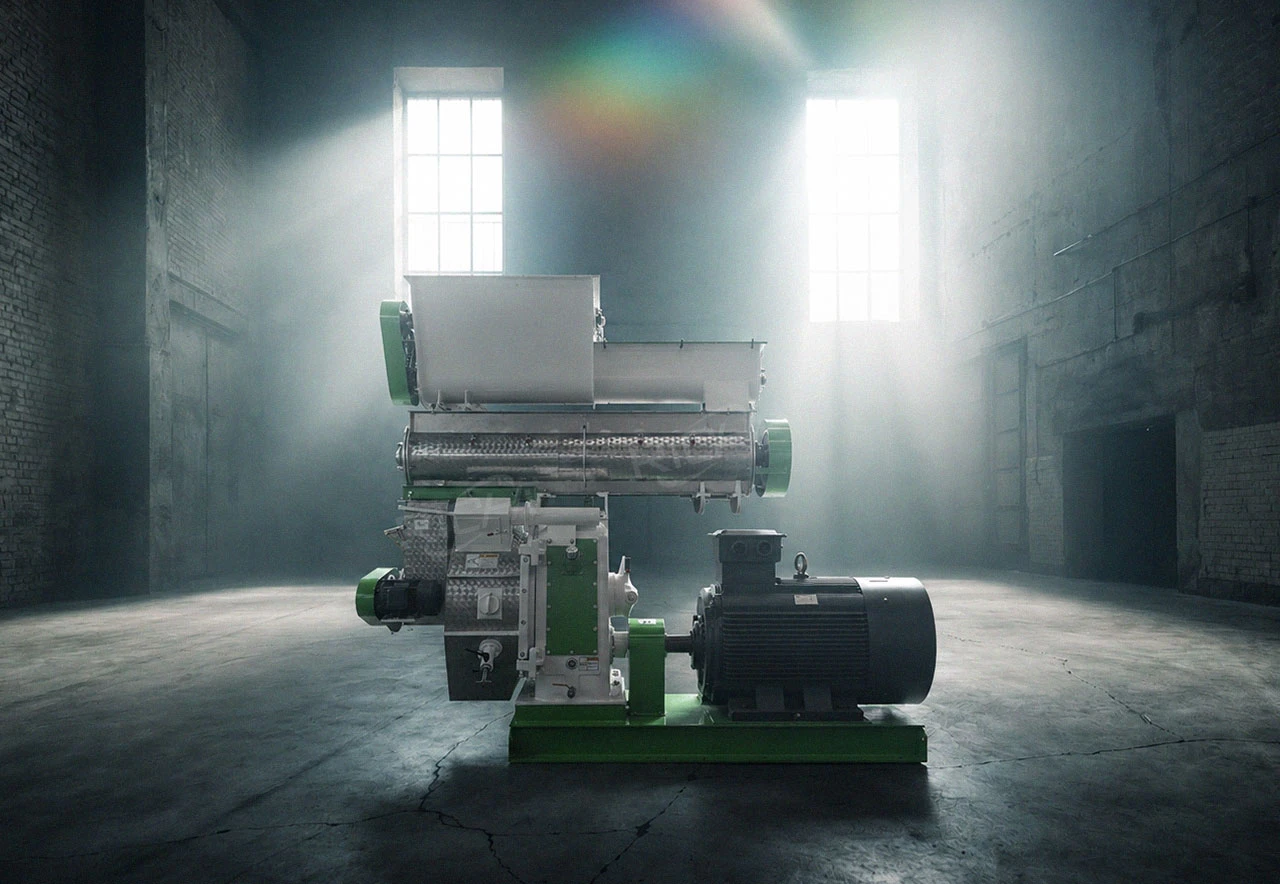
Equipment Structure
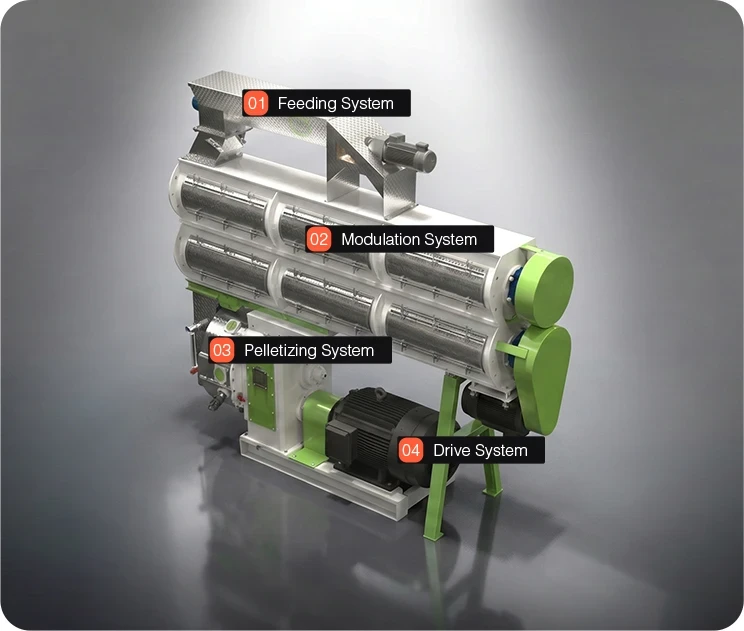
Introduction to the Pellet Machine
This machine we offer uses a heavy-duty ring die system – nothing fancy, just solid. It can easily handle high-fiber forages like alfalfa and straw. Each structural unit is precisely engineered. It can withstand the demands of commercial feed production.
Capacity: 1-40T/H (customized up to 100T/H)
Power: 22-315KW
Particle size: 2-12mm (common size for cattle feed is 4-10mm)
Features: Forced feeding system, upgraded modulator

Forced Feeding System
The forced feeding system sits at the top of the machine. It steadily feeds lightweight materials like forage and meal into the feeder. This makes your processing easier. You can also adjust the feeding speed at any time according to production needs, achieving variable frequency feeding.
A good feeding system reduces material waste, increases output, and makes the feed nutrition more uniform.
Modulation System
The dairy feed pellet machine can be equipped with a multi-layer conditioner. The outer shell is made of integral 304 stainless steel. It better resists high temperature, high humidity, and acidic substances during processing.
Steam conditioning softens the material and improves gelatinization. The starch gelatinization degree of the finished feed can increase by over 30%. This makes it easier for dairy cows to digest and absorb.
Pelletizing System
The conditioned material enters the pelletizing chamber, where it is pressed into pellets that dairy cows like. The ring die and roller work together to squeeze the material. Cutters on both sides cut the extruded pellets evenly and neatly.
The ring die is the most critical forming part of the pelletizing system. You can choose the die diameter based on your herd size and the age of your cows.
Drive System
From feeding to conveying to pelletizing, the whole process demands a lot from the drive system. We use Siemens motors. Power ranges from 22 to 355 kW.
A 4-pole motor is generally fine for ordinary forage. For grass, we recommend a 6/8-pole motor. It delivers more torque and handles the raw material better. You can choose the configuration based on your actual needs.
Parameter Table
Dairy feed pellets are typically 4, 6, 8, or 10 mm in size. We select different feed formulas and pellet sizes according to the type and age of the cow.
| Model | SZLH250 | SZLH320 | SZLH350 | SZLH420 | SZLH508 | SZLH558 | SZLH678 | SZLH768 | SZLH858 |
| Capacity(T/H) | 1-2 | 3-4 | 5-7 | 8-12 | 10-18 | 15-25 | 20-30 | 25-40 | 28-45 |
| Main Motor Power(kw) | 22 | 37 | 55 | 110 | 160 | 180-200 | 220-250 | 250-280 | 315-355 |
| Feeder Motor Power(kw) | 0.75 | 1.5 | 1.5 | 1.5 | 2.2 | 2.2 | 2.2 | 2.2 | 2.2 |
| Conditioner Power(kw) | 1.5 | 2.2 | 3 | 7.5 | 11 | 11 | 11 | 11 | 15 |
| Dia.of Ring Die(mm) | 250 | 320 | 350 | 420 | 508 | 558 | 678 | 768 | 858 |
| Final Pellet(mm) | 2-12 | 2-12 | 2-12 | 2-12 | 2-12 | 2-12 | 2-12 | 2-12 | 2-18 |
These data are obtained from rated output on a complete production line. They are accurate.
Core Advantages
Let me share why our customers keep coming back.
OUTPUT
Stable and Adjustable, Suitable for Large-Scale Production
You can change the formula and pellet size as needed. This meets various production requirements. The ring die pressing system combined with a high-precision transmission system helps you avoid material interruptions.
DURABILITY
Built Tough for Long-Term Operation
Key components are made of wear-resistant alloy materials. They withstand abrasion. The heavy-duty frame is strong and stable. The modular structure greatly reduces maintenance time.
Choosing RICHI is like buying insurance for continuous production.
SAFETY
Well Protected, Clean and Hygienic
Built-in safety interlocks and real-time monitoring devices are installed. If pressure or resistance exceeds the limit, the safety pin breaks, the switch trips, and the machine shuts down.
All parts that contact the material are made of stainless steel. They resist wear and are hygienic. The raw material stays clean, so the animals eat safely.
Applications of the Feed Pellet Machine
RICHI dairy feed pellet machines can be used alone or integrated into a production line. Here are a few typical scenarios:
Small Farms and Cooperatives
For small farms and cooperatives, a capacity of 1-3 tons per hour is ideal. Suitable for local feed processing startups, as well as small and medium-sized dairy farms with 100 to 500 dairy cows, family farms, and cooperatives.
The machine has low cost, simple installation and operation, and the capacity is fully sufficient.
Recommended models : SZLH250, SZLH320
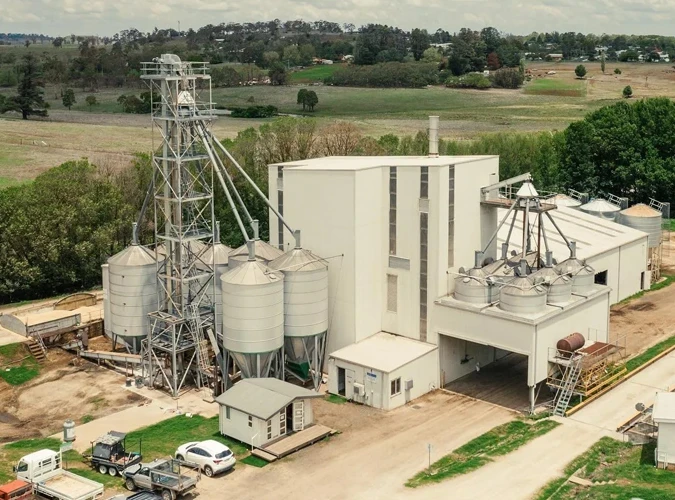
Medium-Sized Feed Mills and Large Farms
Capacity of 3 to 8 tons per hour. Supports multiple raw materials and customized formulas. Suitable for professional feed mills and regional distributors with higher production requirements, as well as large farms with 500 to 3,000 dairy cows.
Recommended models : SZLH320, SZLH350,SZLH420
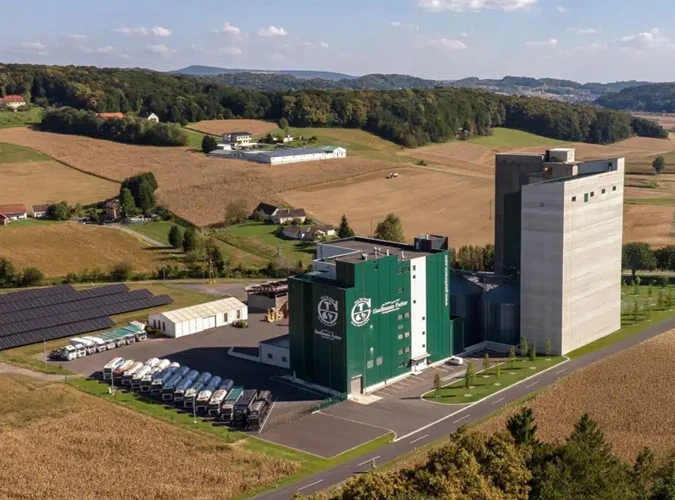
Large industrial Feed Mills
We offer heavy-duty pellet machines with capacities over ten tons per hour. They are more tolerant of high-fiber raw materials and have a high degree of automation. These machines can be fully integrated into dairy feed production lines, making them suitable for industrial-scale production.
They are a good fit for large feed companies and integrated agricultural enterprises.
Recommended models : SZLH420, SZLH558,SZLH678,SZLH858
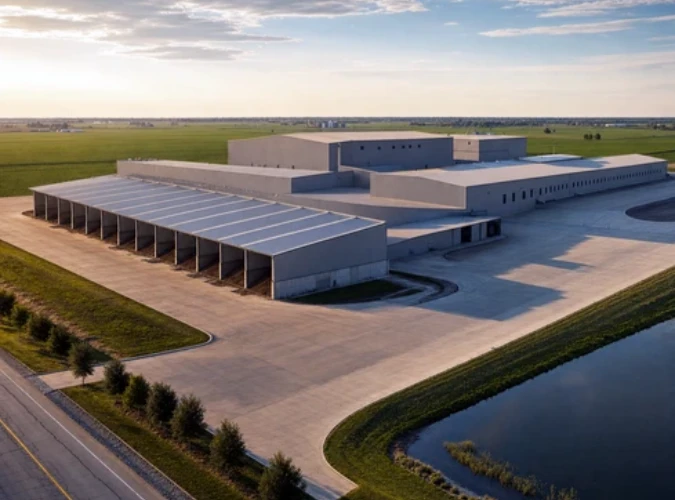
Dairy Feed Production Line
A high-quality dairy feed pellet machine cannot truly perform well without support from pre-treatment and post-packaging stages.
Because dairy feed uses many different raw materials and formulas, we offer a complete solution – from raw material to pellets, all integrated together.
Raw Material Cleaning
Raw materials are first sent to the cleaning system. They pass through a drum pre-cleaner and a permanent magnet to remove impurities like moldy materials and iron filings.
Crushing and Particle Size Control
A rotary distributor sends the raw materials to the grinding bins. They are ground to a fineness that is easy for dairy cows to digest and absorb, according to the formula requirements.
Raw Material Distribution and Mixing
The ground materials are controlled by an intelligent batching scale. After weighing, they are sent to the mixing bin for blending. Then a bucket elevator takes them to the bin before the pellet mill.
Conditioning and Pelletizing
The feeder sends the batch into the conditioner. The material is fully conditioned in a steam environment. Then the ring die and roller press the material into shape. The cutter cuts the pellets to the required length.
Cooling and Screening
Freshly made pellets come out at around 80°C. They must be sent to the cooler to cool down. When discharged, they pass through a rotary grading sieve. The qualified pellets go into the finished product bin.
Automatic Weighing and Packaging
Finally, the packaging scale automatically weighs the pellets. After an operator attaches the label, the bag is sealed. At this point, the entire dairy feed production line is complete.
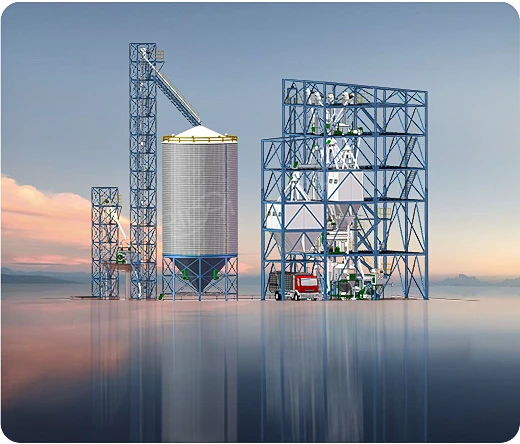
Pellet Machine
Project Case
Our machines work very well. They are now widely used across six continents: Asia, Europe, Africa, North America, South America, and Oceania. We have sold them to more than 140 countries and regions.
Case Studies
●Saudi Arabia
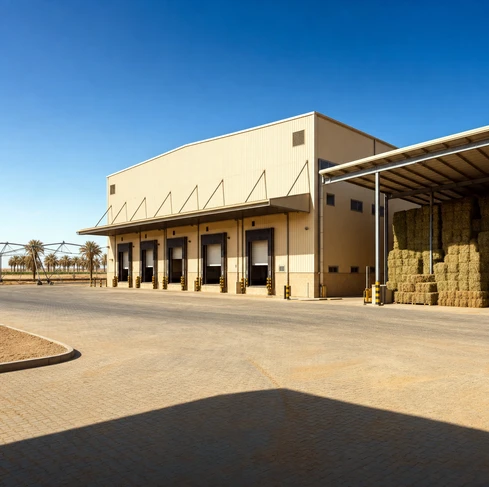
15-16T/H Cattle Feed Pellet Machine
The customer was a long-established local feed mill. Their old pellet machine could not keep up with production. We replaced it with the SZLH508 pellet machine. We added a double-layer conditioner and optimized the ring die compression ratio.
The new machine produces dense and fine pellets. Output is stable at over 15 T/H, and the fines rate has dropped significantly.
- Ingredients : Alfalfa and wheat straw
- Product dimensions : 2-12mm
●USA
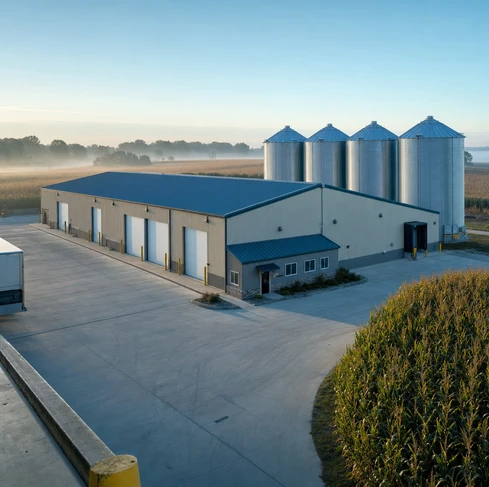
10-12T/H Cattle Feed Production Line
The customer was new to ruminant feed. They were not familiar with the pelleting process for high-fiber raw materials. During trial runs, the machine frequently clogged, and the pellets did not form properly.
We helped them rematch the ring die opening rate and roller gap on the SZLH420 pellet machine. We also adjusted the feeding frequency. After the changes, pelleting ran smoothly. Output was stable at 10-12 T/H, and pellet uniformity met the requirements for beef cattle fattening.
- Ingredients : Corn, soybean meal and alfalfa hay
- Product dimensions : 2-12mm
●Argentina
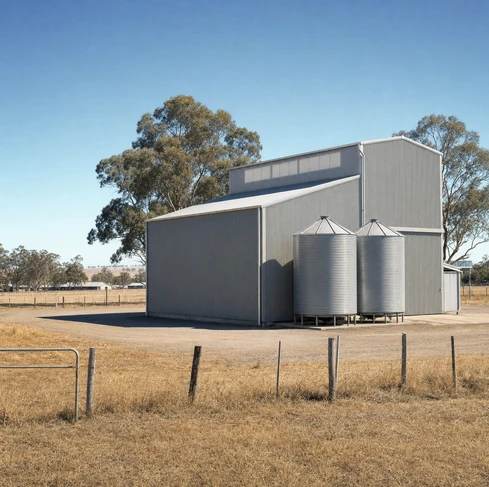
3-4T/H Cattle Feed Pellet Production Line
The customer’s old pellet machine did not cool sufficiently in the humid environment. We recommended the SZLH320 pellet machine. During on-site commissioning, we specifically optimized the cooling air duct and the moisture-proof design at the machine outlet to suit the local humid climate.
After startup, the pellet moisture content met the standard, and the storage life was significantly extended.
- Ingredients : Corn, soybean meal and alfalfa
- Product dimensions : 2-12mm
●Uzbekistan
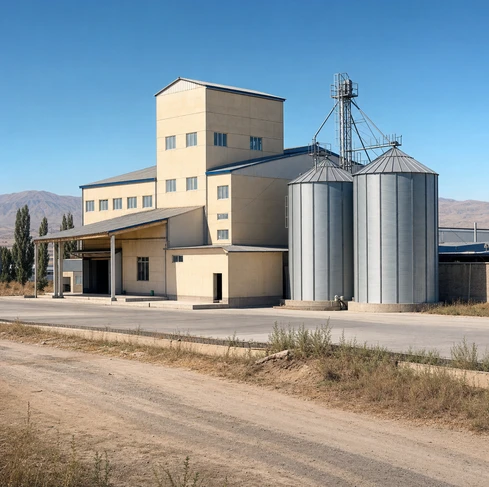
3-4T/H Cattle Feed Pellet Production Line
The customer mainly produced pellets for his own farm. But the plant site was crossed by a railway track that could not be removed. A conventional layout was impossible.
We arranged the SZLH320 pellet machine and its supporting feeding and conditioning units on both sides of the track in a modular layout. We used a custom long-distance drive shaft to connect the main machine. In the end, the pellet machine ran normally.
- Ingredients : Wheat, cottonseed meal and straw
- Product dimensions : 8/10mm
Project Process
Solution Design
We like to understand your situation first: what raw materials you have, what capacity you want, and how your plant is laid out. Then our R&D and design team creates a customized plan for you.

Manufacturing, Installation And Testing
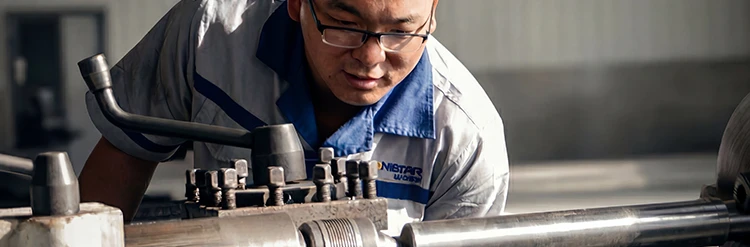
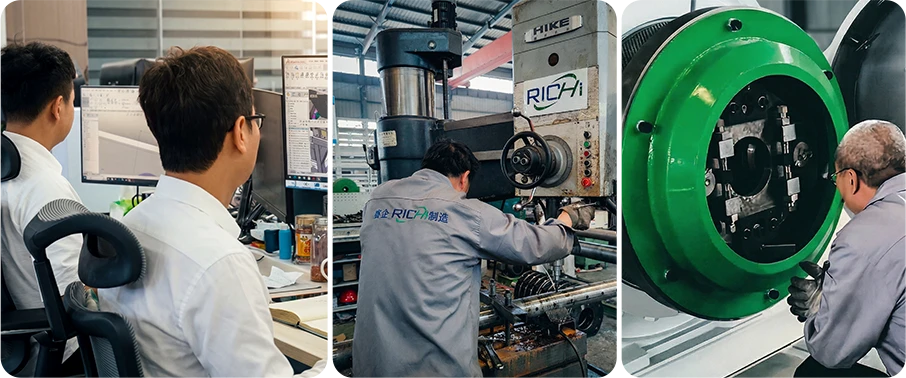
RICHI has a dedicated modern intelligent manufacturing base. We hold CE and SGS international certifications. This ensures that every machine meets quality standards.
When we deliver, we not only commission the machine but also teach your team how to use it. We only sign off after you confirm you are satisfied.
Trade And Shipping
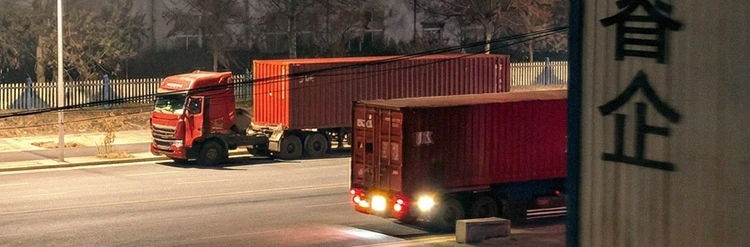
We offer three logistics options: sea, land, and air. Based on your country and delivery date, we provide the fastest and safest shipping route.

After-Sales Service
Our service personnel are located around the world. If your machine has a problem, our after-sales team will provide a solution immediately. Service personnel can arrive at your site within 48 hours.

About RICHI Machinery
Based in China and serving global markets, RICHI Machinery is a global manufacturer and engineering service provider specializing in pellet production equipment and complete processing systems. From feed, biomass, and organic fertilizer to cat litter and agricultural waste recycling, we help customers build efficient, reliable, and scalable production solutions tailored to their raw materials, capacity requirements, and market goals. With projects delivered across multiple industries and countries, our focus is always on practical performance, long-term operation, and customer success.
Advanced Engineering & Intelligent Manufacturing
Driven by technology and manufacturing expertise, RICHI integrates process engineering, equipment R&D, intelligent manufacturing, and project delivery into one complete service system. Our modern production facilities, precision machining capabilities, and experienced technical team allow us to provide customized equipment, complete plant design, automation integration, installation guidance, and ongoing technical support. From single machines to fully integrated production lines, we deliver solutions designed for stability, efficiency, and sustainable production growth.
Frequently Asked Questions
What are the benefits of using a dairy feed pellet machine?
High temperature and pressure kill bacteria. Fibrous materials gelatinize better, so animals digest and absorb more. You can adjust the formula according to the cow’s nutritional needs at different stages. Pellets are easy to store and transport, and they do not spoil easily.
They save labor and time during feeding and can connect to automated feeding systems, making large-scale feeding management easier.
Can RICHI’s dairy feed pellet machine handle high-fiber, high-moisture materials like alfalfa?
Yes. We have designed a forced feeding system and a reinforced ring die structure. We can process high-fiber materials like alfalfa, oat grass, and straw. Without a doubt, our machine produces good-quality, digestible pellets.
What is the capacity range of RICHI’s dairy feed pellet machine? How do I choose the right model?
The capacity ranges from 1 to 40 tons per hour, and we can customize up to 100 tons per hour.
Which model to choose depends on your capacity requirements and raw material formula. If you are not sure, contact us. Our professional team will provide a one-on-one capacity matching plan.
Is the machine complicated to operate? How can we learn to use it?
Operation is not complicated. The dairy feed pellet machine supports one-button start. Even better, the machine parameters can be adjusted intelligently. That means your workers can learn quickly with simple training.
In addition, we provide detailed operation manuals, maintenance checklists, and instructional videos.
What is the warranty period and maintenance policy?
The warranty period is 12 months. We will repair any non-human damage. What’s more, even after the warranty expires, we offer lifetime maintenance service. You only pay for the spare parts.
Do you provide installation guidance or overseas engineer services?
Yes. According to the terms we agree on, we will send engineers to your site to help with installation, commissioning, and operation training. We will make sure your team can operate the machine independently very soon.


