
Rice Husk Pellet Mill
Are you troubled by the waste of rice husks, environmental pressures, and high fuel procurement costs? Richi rice husk pellet mill is characterized by its strong adaptability, high output, and low energy consumption. It can process raw rice husks into high-density, high-calorific-value fuel pellets and animal bedding pellets, turning agricultural waste into considerable profits and easily solving the above problems for you.
Customer output : 8t/h
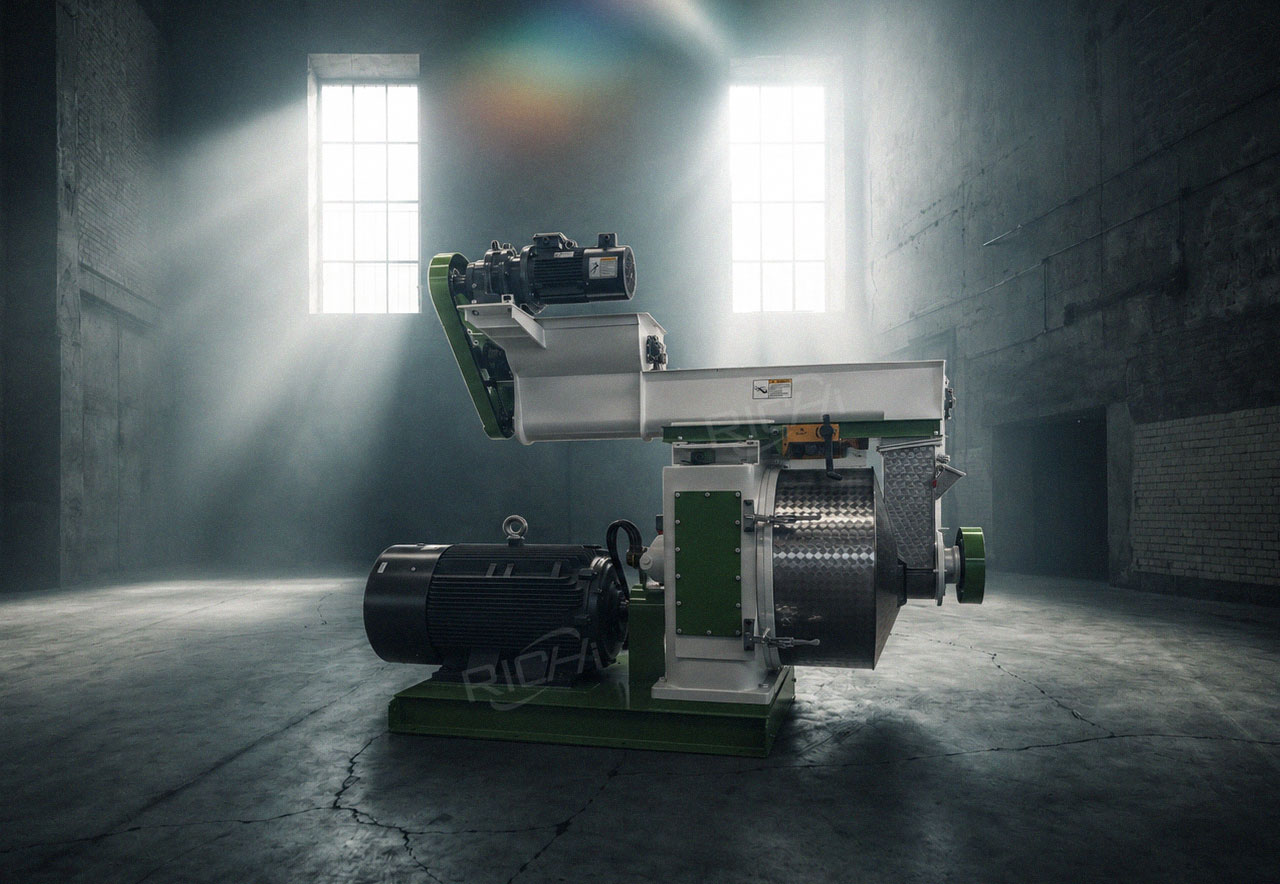
Equipment Introduction
This equipment primarily processes biomass raw materials such as rice husks, sunflower seed shells, peanut shells, corn stalks, and corn cobs into pellets typically 2-12mm in size. These pellets can be used as fuel or feed, achieving the recycling of waste resources, protecting the ecological environment, saving costs, and improving economic efficiency.
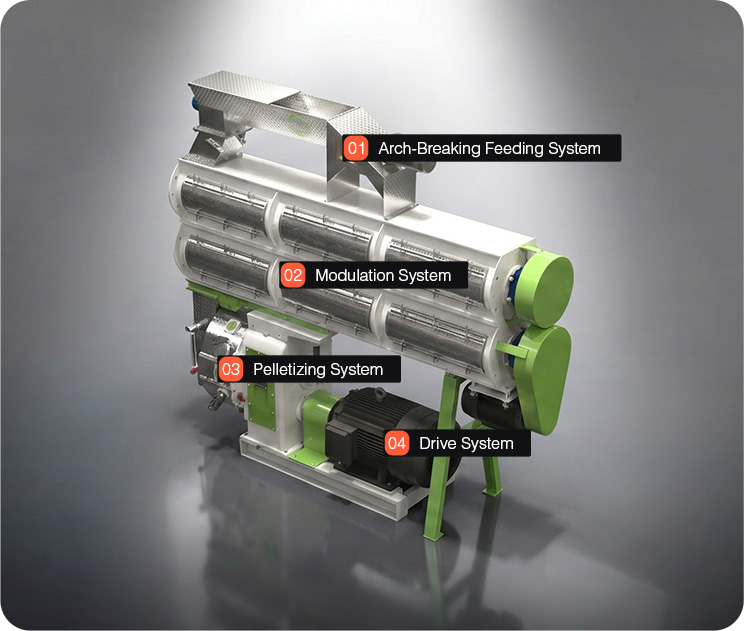
Structure of Rice Husk Pellet Mill
The rice husk pelletizer adopts a modular design, mainly consisting of a feeding system, a pelleting system, and a transmission drive system. These systems work together to ensure stable operation and efficient pelleting.

Feeding System
Biomass raw materials such as rice husks can only enter the pelletizer after being crushed, dried, and processed into qualified powder. This system mainly consists of a variable frequency feeder, a feeding trough, and a forced feeder. It adopts a variable frequency speed regulation + forced feeding design, ensuring uniform and smooth material feeding and guaranteeing a continuous and stable pelleting process.
Modulation System
Using a double-layer spiral mixing technology, the temperature and moisture are precisely controlled between 90-110℃ and 8%-20% respectively, so that the rice husks are fully mixed with steam and moisture, improving the pellet forming rate and ensuring the production of high-quality pellets that meet your needs.
Pelletizing System
After the material enters the granulation chamber, the ring die and pressure roller work together to force the powder into the die hole, thus initially shaping it. Then, a built-in high-precision cutter cuts it into uniform, compact 6-12mm finished granules.
Drive System
Our equipment is equipped with a Siemens motor, providing strong power for long-term machine operation. Compared to traditional belt drives, the high-precision gear drive system directly drives the main shaft, resulting in higher transmission efficiency and stronger torque output, significantly improving granulation rate and production efficiency.
Parameter Table of Rice Husk Pellet Mill
Depending on varying production requirements, we primarily offer the following six models of rice husk pellet mill. We are confident that you will find a model that meets your satisfaction. Detailed specifications are provided in the table below.
Rice husk production
| Model | CZLH320 | CZLH350 | CZLH420 | CZLH520 | CZLH678 | CZLH768 |
| Main motor power (KW) | 22 | 37 | 90 | 132 | 185 | 250 |
| Breaker feeder power (KW) | 2.2 | 2.2 | 3 | 3 | 3 | 4 |
| Forced feeder power (kW) | 0.75 | 0.75 | 1.5 | 1.5 | 1.5 | 1.5 |
| Die Inner Diameter (mm) | 320 | 350 | 420 | 520 | 673 | 762 |
| Finished Pellet Diameter (mm) | 4~12 | |||||
| Output (T/H) | 0.5~0.6 | 1.0~2.0 | 1.8~2.0 | 2.8~3.0 | 4.0~5.0 | 6.0~8.0 |
Advantages of Rice Husk Pellet Mill
Our rice husk pellet mill boast advantages such as low raw material costs, strong compatibility, energy efficiency, environmental friendliness, and low maintenance costs.
number one
Low Raw Material Costs and Wide Range of Sources
Rice husks, a byproduct of rice processing, are a stable and inexpensive source, readily available locally. Our equipment transforms rice husks into high-value-added pellet products, improving resource utilization and creating significant profit potential.
number two
Multi-functional and Highly Compatible
This equipment is not only suitable for rice husk pelletizing but can also process various biomass raw materials such as sawdust, sunflower seed shells, peanut shells, and corn stalks. You can flexibly adjust your production plan according to your needs and circumstances, improving equipment utilization and reducing investment risk.
number three
Energy-Saving and Environmentally Friendly
Processing agricultural waste such as rice husks into biomass pellets effectively reduces environmental pollution caused by open burning and lowers dependence on traditional energy sources. Furthermore, pellet fuel burns more completely and is less polluting, achieving both economic and ecological benefits, meeting current energy conservation and emission reduction requirements.
Applications of Rice Husk Pellet Mill
Our rice husk bedding pellet mill has a wide range of applications and can meet the production needs of rice mills, biomass fuel plants, livestock breeding farms, and more.
Rice Mill
After rice processing, what should be done with the rice husks? Throw them away, sell them, or burn them? You might want to consider a different approach: use our rice husk pellet mill to turn your large quantities of rice husks into animal bedding pellets, biomass fuel pellets, feed pellets, etc., which not only improves the utilization rate of rice husks but also generates substantial profits.

Biomass Fuel Plant
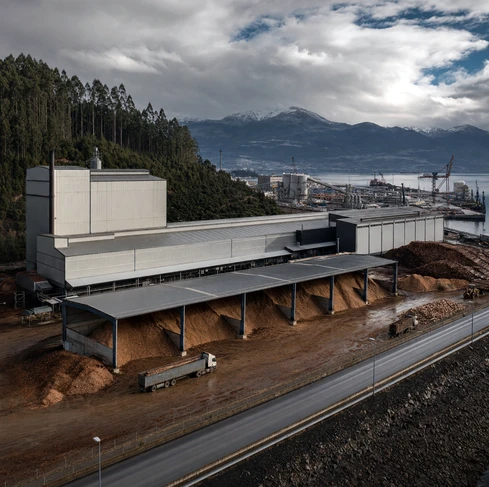
Rice husks are a valuable raw material for biomass pellet production due to their high calorific value, stable availability, and low cost. You can use our rice husk pellet mill to process rice husks into high-density fuel pellets, helping you reduce costs, increase efficiency, and enhance your environmental competitiveness.
Livestock Breeding Base
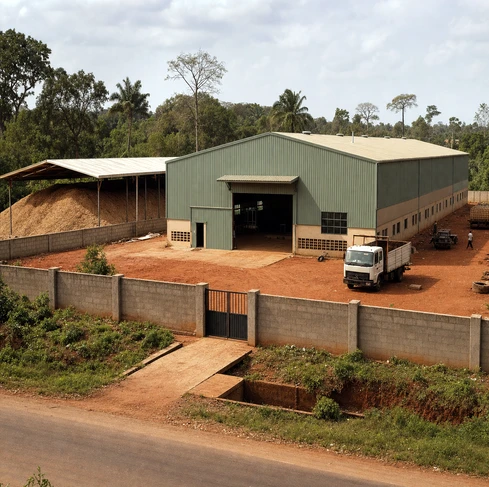
If you are still troubled by the purchase and cleaning of livestock bedding, you might as well try our rice husk pellet machine. It turns inexpensive rice husks into environmentally friendly bedding pellets for use in livestock farming environments. This not only reduces the hassle of purchasing but also makes cleaning easier, thereby improving the animal’s living environment.
Complete Rice Husk Pellet Production Process
The complete rice husk processing workflow includes raw material cleaning, crushing, mixing, pelletizing, cooling,screening and packaging.
Cleaning Section
Remove impurities from raw materials such as rice husks to prevent equipment damage and ensure proper pelleting.
Crushing Section
Use a dropper to crush the rice husks into 3-5mm powder.
Drying Section
Dry the material using a drum dryer to a temperature of 13-18℃ for subsequent pelleting.
Pelletizing Section
Use a biomass pellet mill to produce finished pellets from the dried material.
Cooling & Screening Section
Due to the high temperature of the pellets, a counter-current cooler should be used to cool the material.Use a vibrating screen to remove powder and debris from the pellets, ensuring pellet quality.
Packaging Section
Use a finished product packaging scale to weigh and bag the screened finished pellets.

Project Cases
Thanks to its high quality and excellent reputation, Richi’s rice husk pellet machine has become the preferred choice for numerous customers.
●Vietnam
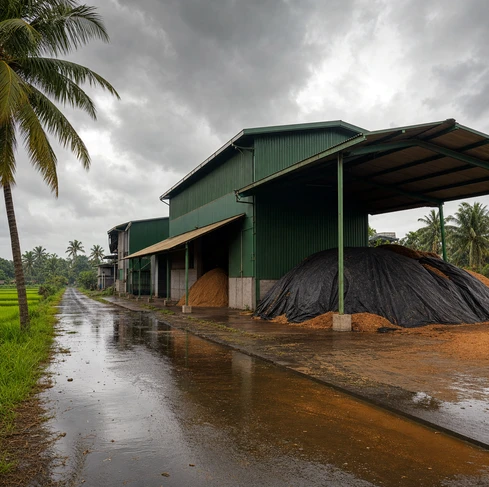
1-1.2t/h Small Rice Husk Pellet Plant Project for Biomass Fuel
Background: The client utilizes the abundant rice husk by-products of the Mekong Delta to pelletize clean biomass fuel, primarily for use in local industrial boilers and livestock bedding, achieving resource utilization of rice husk waste.
- Capacity: 1-1.2t/h
- Power: 90kW
- Pellet Diameter: 6mm
●Thailand
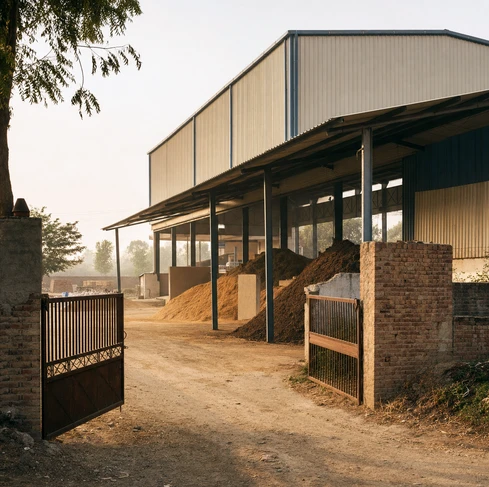
2-3t/h Industrial Rice Husk Pellet Production Line Project
Background: This project utilizes the abundant local rice husk resources to process them into high-density pellets, mainly for thermal power generation and industrial steam supply, achieving recycling of rice husk waste.
- Capacity: 2-3t/h
- Power: 160kW
- Pellet Diameter: 8mm
●Pakistan

0.5-0.8t/h Compact Rice Husk Pellet Mill for Small Businesses
Background: This project combines the advantages of local rice cultivation and palm industry, using a mixture of rice husks and palm shells as raw material for pelleting. The pellets will be used for factory steam supply and commercial fuel sales, contributing to the development of the local circular economy and replacing traditional fossil fuels.
- Capacity: 0.5-0.8t/h
- Power: 55kW
- Pellet Diameter: 6mm
●Brazil
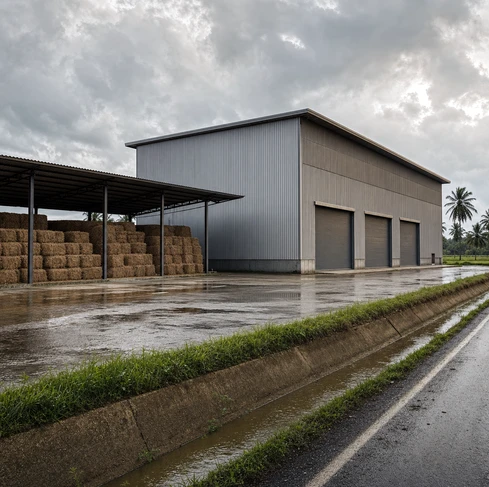
8-9t/h Automatic Rice Husk Pellet Manufacturing Project
Background:This project is led by a large local energy group, relying on the abundant rice husk resources in the main rice-producing area of southern Brazil. It uses high-capacity models of 8 tons or more to achieve large-scale, continuous production.
- Capacity: 8-9t/h
- Main Motor Power: 315kW
- Pellet Diameter: 10mm
Customized Solutions
Richi offers personalized services, tailoring solutions to your specific needs.
Raw Material Diversity and Impurities
Raw materials such as rice husks and straw contain numerous impurities,which leads to frequent material blockages and causes excessive wear on machinery. By utilizing cleaning equipment-such as water drop hammer mill-impurities can be effectively removed from the raw materials, thereby reducing machine wear and significantly boosting both granulation efficiency and pellet formation rates.


Unstable Production Capacity and Difficulty in Controlling Pellet Size
Given varying production output requirements, achieving uniform pellet diameter and density can be challenging. However, by flexibly adjusting the specifications of the ring die and pressure rollers, diverse production needs can be effectively met, ensuring both production stability and the consistency of the finished pellets.
Low Automation Level and High Labor Costs
Traditional equipment often involves cumbersome operations and extensive manual intervention, resulting in low efficiency and a high susceptibility to errors. By integrating a PLC intelligent control system-which automatically regulates material feeding, temperature, and rotational speed-production becomes stable and reliable, while labor and management costs are substantially reduced.
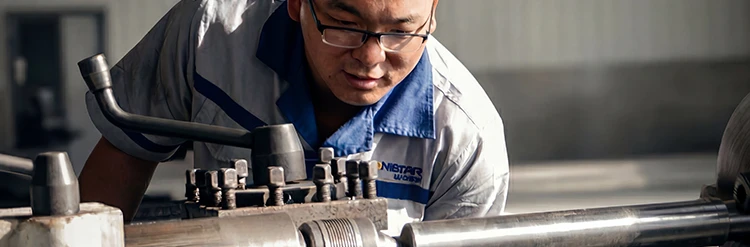
High Dust Levels and Unsafe Operating Environment
Rice husks are lightweight and fluffy, generating significant amounts of dust that pose fire and explosion hazards, thereby compromising workshop safety. By installing dust removal, fire prevention, and ventilation systems-and by optimizing the facility layout-dust pollution can be drastically minimized, thereby ensuring a safe and secure production environment.


About RICHI Machinery
Based in China and serving global markets, RICHI Machinery is a global manufacturer and engineering service provider specializing in pellet production equipment and complete processing systems. From feed, biomass, and organic fertilizer to cat litter and agricultural waste recycling, we help customers build efficient, reliable, and scalable production solutions tailored to their raw materials, capacity requirements, and market goals. With projects delivered across multiple industries and countries, our focus is always on practical performance, long-term operation, and customer success.
Advanced Engineering & Intelligent Manufacturing
Driven by technology and manufacturing expertise, RICHI integrates process engineering, equipment R&D, intelligent manufacturing, and project delivery into one complete service system. Our modern production facilities, precision machining capabilities, and experienced technical team allow us to provide customized equipment, complete plant design, automation integration, installation guidance, and ongoing technical support. From single machines to fully integrated production lines, we deliver solutions designed for stability, efficiency, and sustainable production growth.

Frequently Asked Questions
Is operating this rice husk pellet machine complicated? Do we need to send someone for training?
Absolutely not. Our machine is designed for user-friendliness and intelligence. The control panel is simple and clear, displaying key parameters (such as main motor current and feeding frequency). We will provide a detailed Chinese operation manual and video tutorials.
Under normal circumstances, an average worker can master basic operation and daily maintenance within 1-2 days. Furthermore, we have professional technicians available online at any time to answer any questions you may have regarding operation or after-sales service, ensuring your peace of mind.
How much is your rice husk pellet mill?
The price of the rice husk pellet mill depends on its capacity and configuration. Generally, our pellet machines cost between $ 15,000 and 50,000.
What materials can a rice husk pellet mill process?
A rice husk pellet mill (biomass pellet mill) can process rice husks, straw, corn stalks, sawdust, and other agricultural and forestry waste. With proper pretreatment, such as crushing and drying, the machine can efficiently convert various biomass raw materials into high-density fuel pellets or bedding pellets.
What is the capacity of a rice husk pellet mill? Can it be customized?
The capacity of rice husk pellet mills ranges from small-scale (hundreds of kilograms/hour) to industrial-scale (several tons/hour). Richi can provide fully customized biomass pellet mill solutions, including single machines or complete production lines, based on customers’ raw material and output requirements.
Can you provide solutions from rice husk pellet machines to complete rice husk pellet production lines? For example, including equipment for crushing, conveying, cooling, and packaging?
Absolutely! We are not just single-machine suppliers, but also turnkey solution providers for entire plants. In addition to the core rice husk pellet mill, we can also provide complementary equipment according to your needs: crushers, dryers, screening machines, coolers, vibrating screens, balers, and various conveying systems such as screw conveyors, elevators, and belt conveyors.
We can tailor the most economical and efficient production line layout for you. Based on your plant size, raw material characteristics, and pellet usage, we select the most suitable equipment and layout for the entire production line to ensure stable output, high efficiency, and ease of operation.
The pelleting process generates significant heat. Will prolonged operation cause damage to the transmission gears and bearings of the rice husk pellet machine?
Damage to transmission gears and bearings in rice husk pellet making machines is typically caused by poor heat dissipation in the pelleting chamber of traditional horizontal ring-die machines. The RICHI rice husk pellet machine adopts a vertical feeding structure, which effectively controls the operating temperature inside the gearbox to below 80°C. Furthermore, it uses SKF heavy-duty bearings and synthetic high-temperature resistant lubricating oil, ensuring a transmission system service life of 8,000-10,000 hours even under 24-hour continuous operation.


